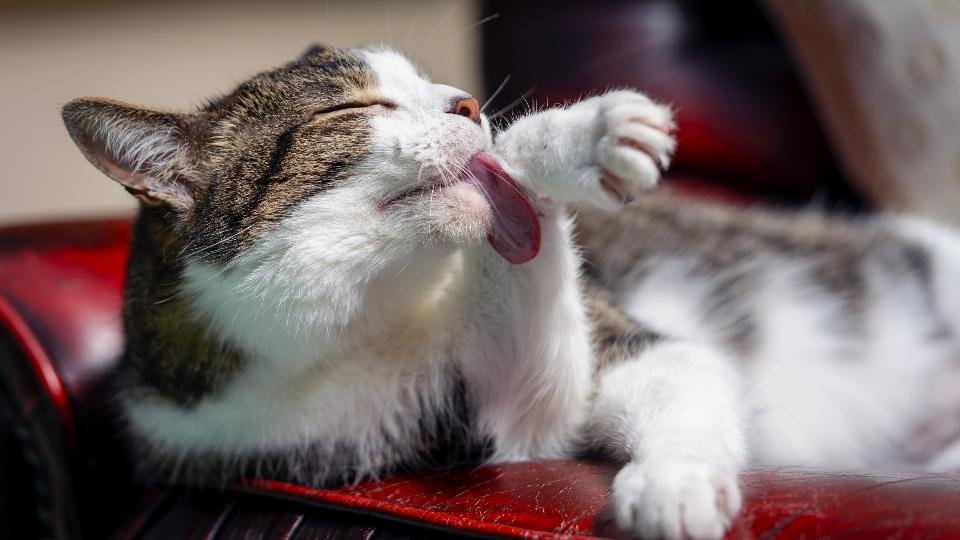
Most cats keep themselves clean and rarely need a bath. But sometimes a bath is necessary: your cat got into something sticky or smelly, has a long coat that needs help, or your vet has recommended a medicated shampoo. This guide explains how to bathe a cat calmly and safely, step by step.
Table of Contents
Does Your Cat Really Need a Bath?
Healthy cats spend a lot of time grooming themselves. Brushing is usually enough, and our cat grooming guide explains how. A bath may be needed if:
- Your cat is covered in something dirty, sticky or harmful
- Your cat is elderly, overweight or ill and can’t groom properly
- Long-haired cats have a dirty or greasy coat
- Your vet recommends a medicated bath
If your cat has touched anything toxic, such as oil, chemicals or certain plants, call your vet straight away before bathing.
What You Need
| Item | Why |
|---|---|
| Cat shampoo | Gentle on skin; never use human or dog products unless your vet approves |
| Two or three towels | One for the sink floor and one or two for drying |
| A sink or small tub | Easier to control than a full bath |
| A jug or gentle sprayer | For rinsing without frightening your cat |
| Non-slip mat | Helps your cat feel steady |
| Treats | For rewards afterwards |
How to Bathe a Cat: Step by Step
- Trim nails and brush first. Trimmed nails reduce scratches, and brushing removes loose hair and tangles.
- Prepare everything. Fill the sink with a few centimetres of lukewarm water before bringing your cat in.
- Lower your cat gently. Hold your cat securely and place them on the non-slip mat, back feet first.
- Wet the coat slowly. Use a jug or gentle sprayer, starting at the shoulders and working back. Keep water away from the face and ears.
- Shampoo gently. Massage a small amount of cat shampoo into the coat, following the direction of hair growth.
- Rinse thoroughly. Rinse until no shampoo remains, as leftover soap can irritate the skin.
- Clean the face with a damp cloth. Never pour water over your cat’s head.
- Wrap and dry. Wrap your cat in a warm towel and gently pat dry. Keep them in a warm room until fully dry.
Before the bath, trim the claws as shown in our guide on how to trim cat nails.
Tips to Keep Your Cat Calm
- Stay calm and speak softly; cats pick up on stress.
- Use lukewarm water, never hot or cold.
- Keep the bath short, ideally under 10 minutes.
- Ask a helper to hold your cat gently.
- Use a hair dryer only on the lowest, coolest setting, and only if your cat tolerates it.
- Finish with treats and quiet time.
How Often Should You Bathe a Cat?
Most indoor cats never need a routine bath. Long-haired cats may benefit from an occasional bath every few months, and some cats with skin conditions need medicated baths on a schedule from the vet. Over-bathing can dry out the skin, so only bathe when needed.

Alternatives to a Full Bath
- Spot-clean with a damp, warm cloth
- Use cat grooming wipes for small messes
- Try a waterless cat shampoo or foam
- Brush regularly to keep the coat clean
- Book a professional groomer for long-haired or difficult cats
When to Call the Vet
Contact your vet if your cat has sores, bald patches, fleas, a bad smell, or is very stressed by bathing. Your vet or a professional groomer can help, especially with elderly or anxious cats. For dogs, see our guide on how to bathe a dog.
Keep Reading
Quick Recap: How to Bathe a Cat
How to Bathe a Cat: FAQ
Can I use dog shampoo on my cat?
No. Some dog products contain ingredients that are dangerous for cats. Always use a cat shampoo.
Is it okay to bathe a kitten?
Only if necessary. Use a kitten-safe shampoo, keep it very short and dry the kitten fully so it doesn’t get cold.
What if my cat panics in the water?
Stop, wrap your cat in a towel and try spot-cleaning instead. Ask your vet or a groomer for help.
Read the Full Cat Grooming Guide
Brushing, nails, ears and teeth for a happy cat.